🌅 The Ultimate Budget Guide to the Maldives: Local Islands, Hidden Bars, and Affordable Luxury
November 11, 2025
Filed in:
I used to think the Maldives were reserved for honeymooners — the kind of place you’d visit once in your lifetime, if you were lucky, and only if someone else was footing the bill.
The overwater villas, private butlers, infinity pools — it all felt worlds away from anything I could realistically afford.
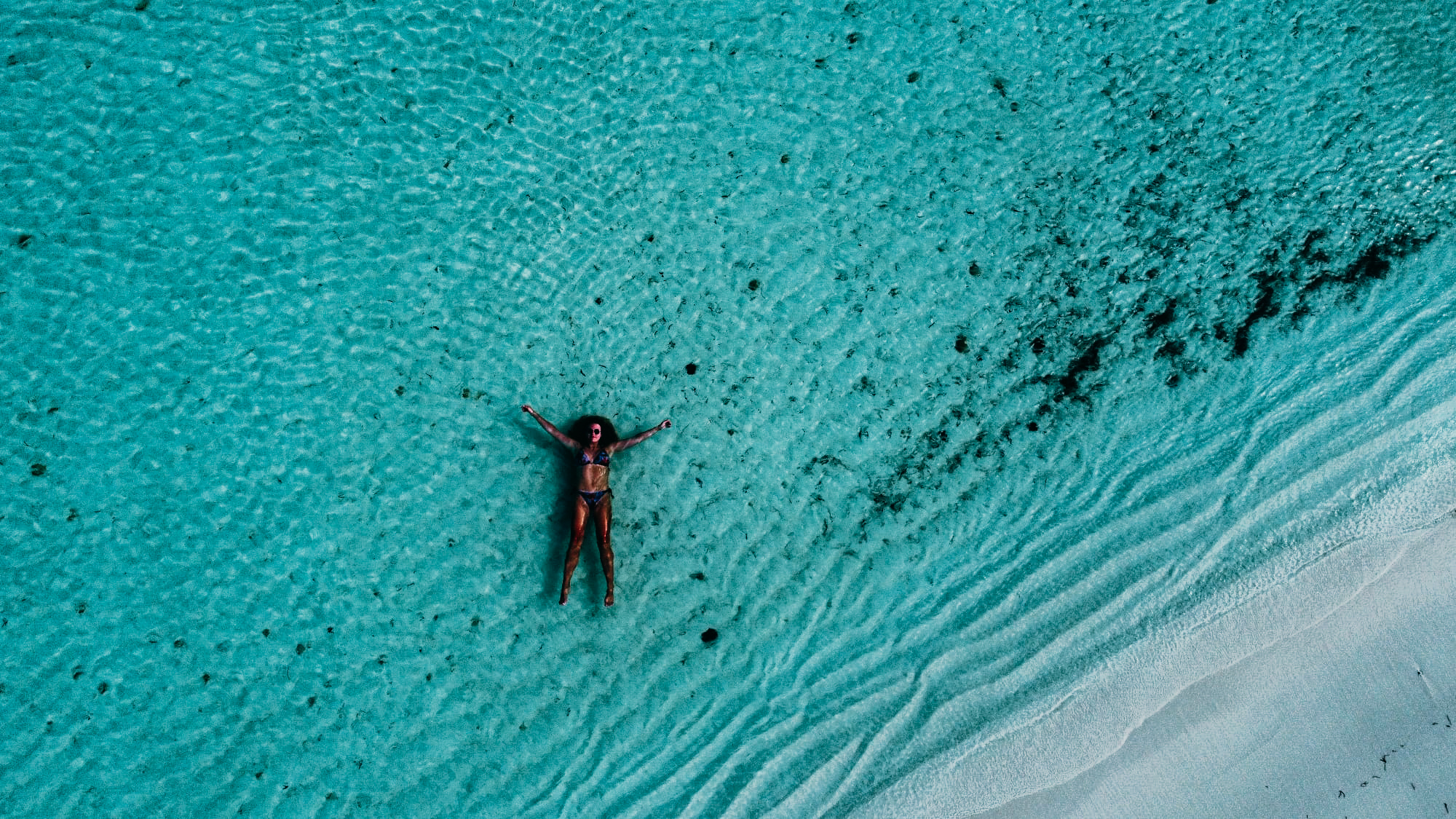
But the truth? The Maldives isn’t just for the rich. You can have the same turquoise waters, the same barefoot breakfasts on the beach, and the same golden sunsets — without the five-figure price tag.
I wanted to prove that. So I joined a guided adventure designed to show the side of the Maldives that most people never see — the local islands.
Over nine days, we explored Thulusdhoo, Dhiffushi, and Dhigurah, each one offering its own version of paradise: surfer energy, sandbank picnics, and whale shark dives that still don’t feel real.
And here’s the best part — I learned the routes, prices, and little hacks so you don’t need a guide to do it yourself.
This isn’t a list of “cheap hotels” and “budget tips.”
This is the blueprint for experiencing the Maldives in full — culture, connection, and quiet luxury included.
By the end of this guide, you’ll know:
- which local islands to base yourself on (and why each one matters),
- how to travel between them without paying resort transfer prices,
- what’s worth splurging on (and what’s not),
- and how to sip cocktails on a floating bar in the middle of the ocean without blowing your budget.
So if you’ve ever thought, “The Maldives isn’t for people like me,” — this one’s for you.
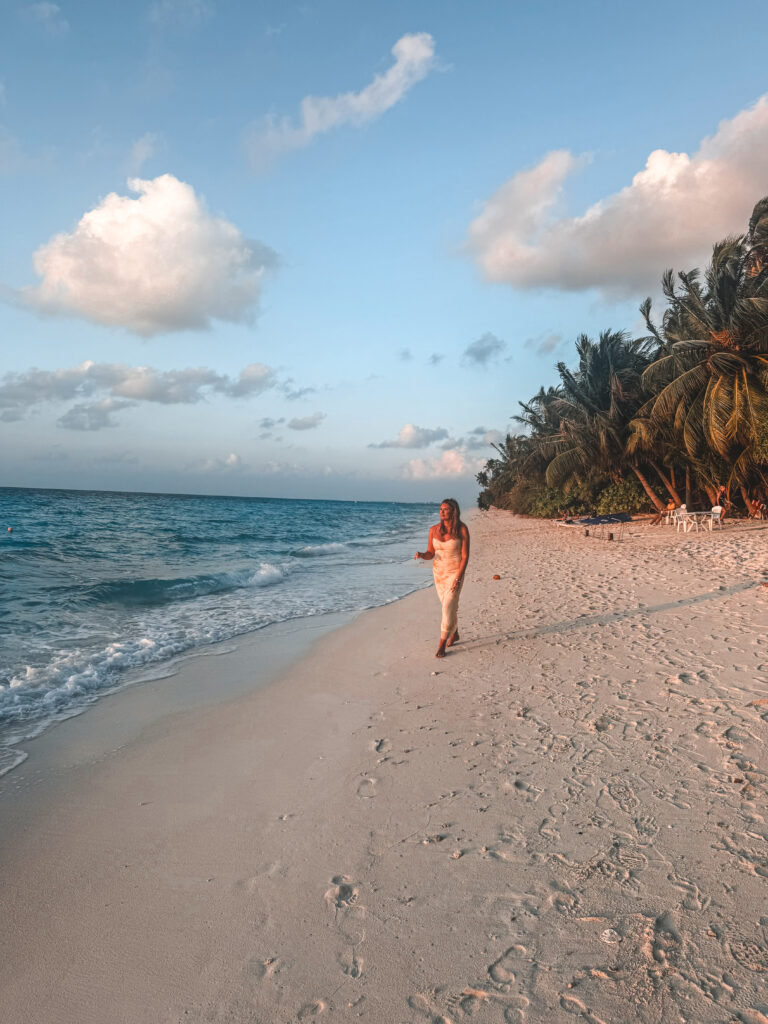
Why the Maldives Isn’t Just for the Rich 🌺
I used to scroll through photos of the Maldives and assume everyone there had a honeymoon fund or a millionaire fiancé.
But the truth is, that version of the Maldives — the one with private seaplane transfers and butlers in linen — is only half the story.
In 2009, the Maldivian government opened its doors to local-island tourism, allowing guesthouses and small hotels to welcome visitors. That single change transformed the islands from a luxury-only destination into a paradise that’s genuinely accessible.
On local islands, you’ll still find:
- the same powder-white beaches and turquoise lagoons,
- reef-edge snorkelling with turtles, rays, and reef sharks,
- island cafés serving fresh fish curries and coconut-milk smoothies,
- and sunsets that cost nothing but your attention.
The difference is the price tag and the perspective.
Resort islands are like beautiful bubbles — everything polished, private, and packaged.
Local islands are the heartbeat of the Maldives: kids kicking footballs on sandy streets, women chatting outside pastel houses, the smell of grilled tuna drifting through the air.
When I first arrived in Thulusdhoo, I realised that “luxury” isn’t just marble bathtubs and champagne breakfasts.
It’s the luxury of freedom — choosing where to eat, walking barefoot through the village, chatting to locals who actually live there.
It’s hearing the call to prayer at sunset and remembering you’re in someone’s home, not just a postcard.
So no, the Maldives isn’t just for the rich.
It’s for anyone willing to swap a resort wristband for a little curiosity — and discover that paradise doesn’t need to come with a five-star bill.
Where to Stay — Affordable Local Islands with Luxury Vibes
If you want beaches that look like a honeymoon postcard but don’t want to spend your savings on a single night’s stay, base yourself on the local islands.
They give you the same turquoise water, the same barefoot mornings and fresh fruit breakfasts — without the resort markup.
During my trip, I explored Thulusdhoo, Dhiffushi and Dhigurah. Each island had its own personality, and together they created the perfect Maldives triangle: surf energy, slow-living charm, and barefoot adventure.
🌊 Thulusdhoo — Surf Vibes & Creative Energy
Just 30 minutes from Malé by speedboat, Thulusdhoo feels like the Maldives’ version of Byron Bay — laid-back, local, and full of character.
It’s known for surf breaks like Cokes and Chickens, where boards bob in turquoise water while locals watch from the shore with coconuts in hand.
The bikini beach here is small but gorgeous, fringed with palms and beach swings. Cafés line the sandy paths — think smoothie bowls, wood-fired pizza, and Maldivian fish curry for under £6.
Stay in one of the island’s guesthouses or small hotels (rooms usually £50–£90 per night). You’ll get modern comfort, A/C, Wi-Fi and a friendly host who probably knows every snorkelling spot by heart.
Perfect for: solo travellers and digital nomads who want community, surf culture, and easy access from Malé.
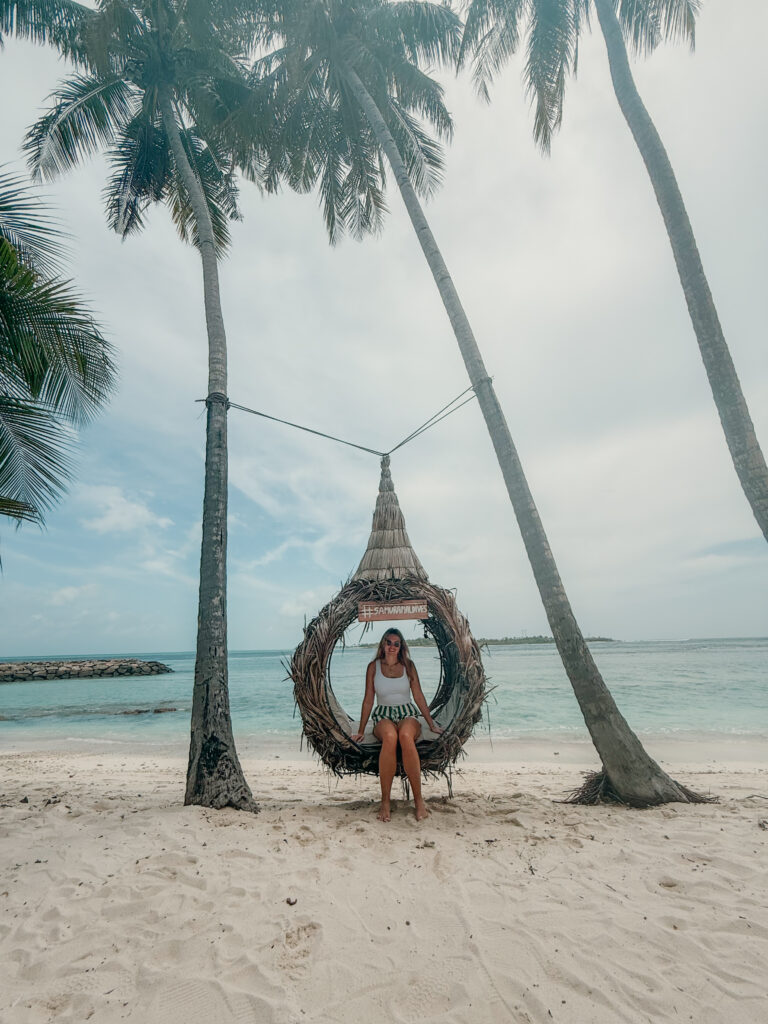
🏖️ Dhiffushi — Sandbanks & Serene Lagoon Life
Dhiffushi sits in North Malé Atoll, about 45 minutes by speedboat or 2½ hours by public ferry.
It’s smaller, slower, and made for people who want calm mornings and postcard-perfect sandbanks.
Imagine clear, shallow water stretching for metres, dotted with paddleboards and anchored dhonis.
The island is so compact you can walk end to end in 10 minutes — which means it’s easy to explore barefoot and impossible to get lost.
Guesthouses here start around £45 a night and often include breakfast.
Spend your days snorkelling off the beach, visiting nearby sandbanks, or joining a dolphin cruise for under £40.
Perfect for: travellers who want peaceful, affordable island life and those Instagram-worthy turquoise-on-white shots without the crowds.
🐋 Dhigurah — Whale Sharks & Wilderness
If the Maldives has a heart for adventure, it’s Dhigurah.
This long, narrow island in South Ari Atoll is surrounded by protected waters where whale sharks and manta rays are spotted all year round.
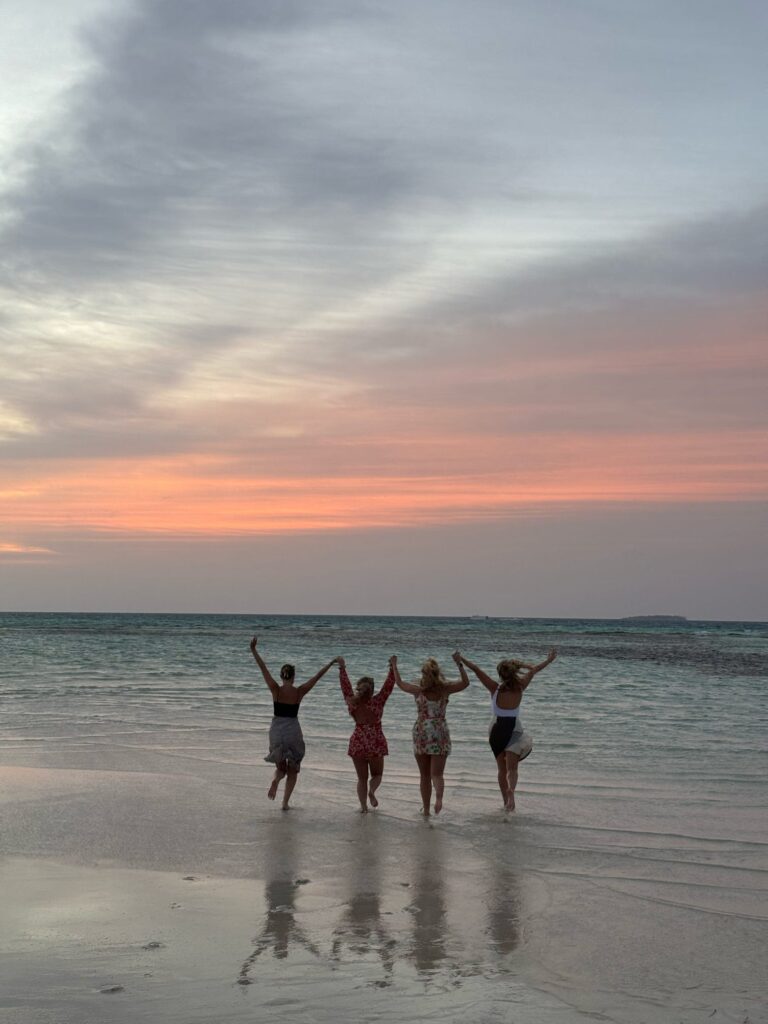
It’s also home to one of the longest bikini beaches in the Maldives — a stretch of white sand that feels endless at sunset.
Guesthouses like Dhiguveli Maldives offer rooftop pools, beach-view rooms and full-day excursions for a fraction of resort prices. Expect to pay roughly £70–£120 per night, with diving and snorkelling trips from £50.
Dhigurah is more remote (about 2 hours by speedboat), but it’s worth every minute of the ride. You’ll arrive, drop your shoes, and probably forget where you left them.
Perfect for: travellers chasing marine life, wide-open beaches and quiet luxury on a budget.
Quick Tip:
If you can’t decide, pair two islands — Thulusdhoo or Dhiffushi (first stop from Malé) with Dhigurah for the finale.
You’ll experience the Maldives from surf to sandbank to whale shark — the full spectrum of paradise.
How to Get Around — Ferries, Speedboats & Transfers
Your biggest challenge in the Maldives isn’t finding a beautiful island — it’s figuring out how to hop between themwithout accidentally booking a £300 transfer.
Once you understand the system, it’s actually simple — and kind of fun.
You’ll get to glide through turquoise lagoons shoulder-to-shoulder with locals, sea breeze in your hair, and that “I’m really doing this” grin on your face.
🛳️ Public Ferries — The Scenic and Super-Cheap Option
If you’re not in a rush, the public ferries are the ultimate budget hack.
They connect Malé with nearby local islands and usually cost between $1–$4 USD per person.
They’re slower (think 2–3 hours instead of 30 minutes) but they’re peaceful, sociable, and give you a real glimpse of island life.
Things to know:
- Ferries don’t run on Fridays — plan around that or you’ll be forced to book a private boat.
- They leave from Malé’s local ferry terminal, not the airport island, so you’ll need to take a 10-minute boat ride across.
- They can be affected by weather; if you’re travelling in monsoon season, double-check times the night before.
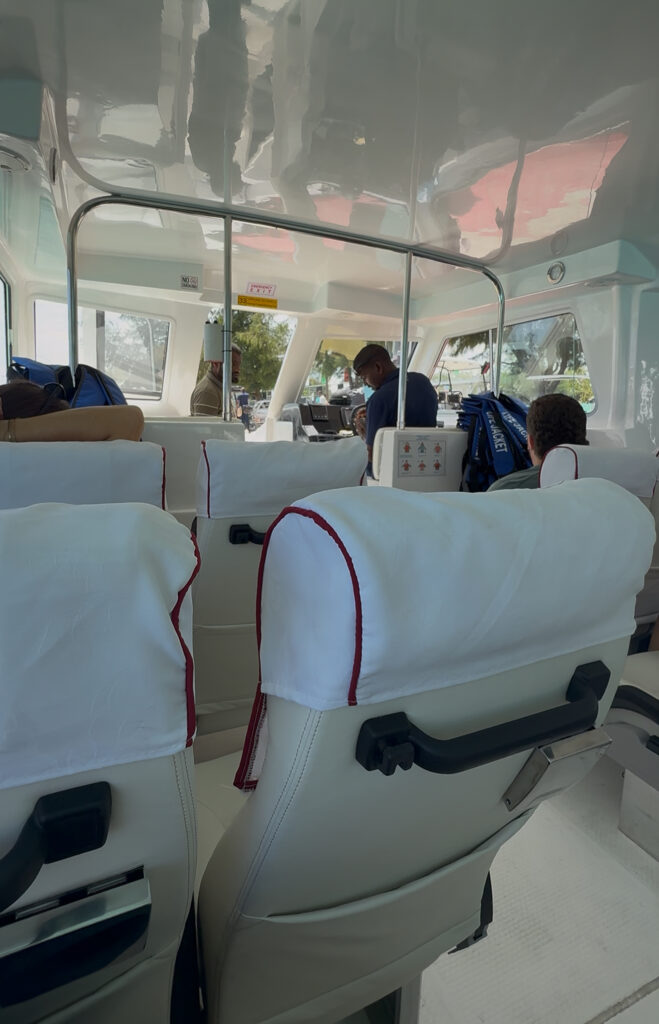
⚡ Speedboats — Fast, Flexible & Still Affordable
Speedboats are the sweet spot between comfort and cost.
They run scheduled routes between Malé / the airport and most popular local islands, with prices ranging roughly $25–$50 one-way.
Dhigurah is a little further, averaging $60–$80 USD each way.
The best bit: your guesthouse can organise your seat for you by WhatsApp — no need to hunt online.
You’ll get a pickup time, a WhatsApp pin for the jetty, and that’s it. The Maldives might be laid-back, but this part works surprisingly smoothly.
✈️ Domestic Flights & Seaplanes — The Fancy Option (You Don’t Need It)
Some far-flung islands are reached by short domestic flights or seaplanes, which cost upwards of $250 USD each way.
They’re beautiful, but for budget or mid-range travellers, shared speedboats get you there just as easily.
Save the seaplane money for snorkelling trips and sunset dinners instead.
🌴 My Route Example
Here’s how I travelled:
- Malé → Thulusdhoo: 30 min speedboat (about $35)
- Thulusdhoo → Dhiffushi: public ferry under $3 USD — slow but beautiful
- Dhiffushi → Dhigurah: speedboat ($70 USD) with a transfer in Malé
It sounds like a lot, but once you’re out there, the system feels natural — locals will literally point you in the right direction if you look lost.
Pro Tip:
If you’re staying on multiple islands, pack light (hand-luggage + backpack) so you can jump boats easily.
What to Eat & Drink on a Budget
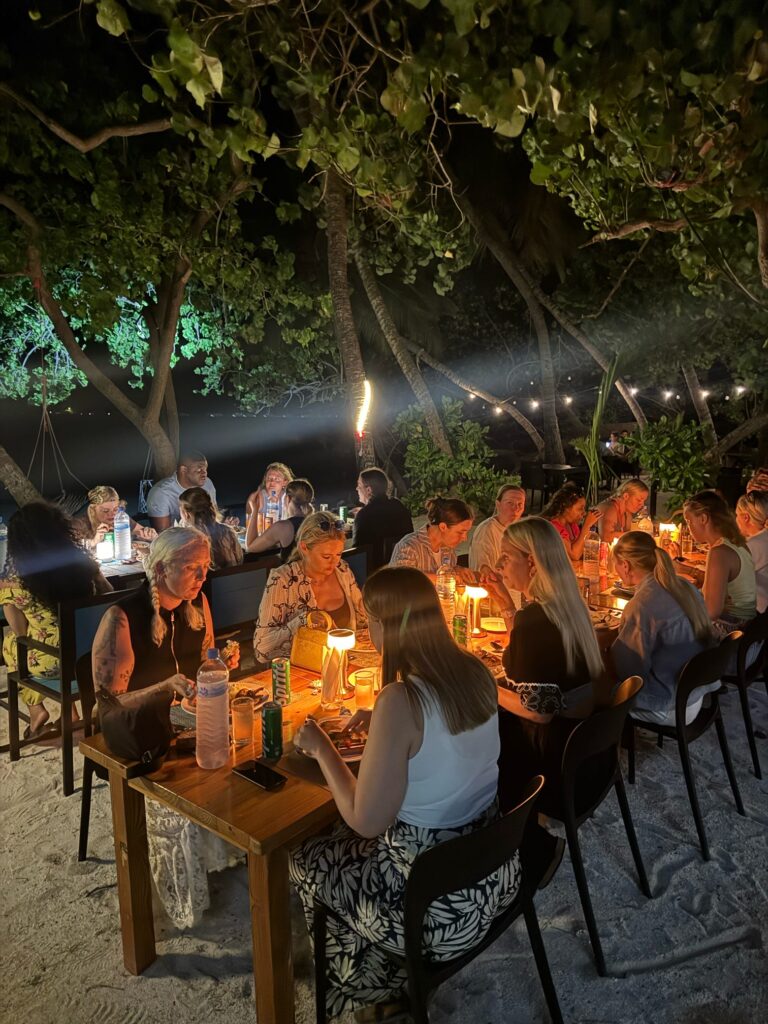
One of the best surprises about travelling the Maldives on a budget is how well you can eat.
Forget the idea that you’ll be living off instant noodles or dry sandwiches — local islands are full of cafés, beach shacks and small restaurants serving food that’s fresh, flavourful, and ridiculously affordable.
🌮 Local Food: Simple, Fresh, and Full of Flavour
Maldivian cuisine is a mix of Indian, Sri Lankan, and Middle Eastern influences, built around fish, coconut, and spice.
Breakfast might be mas huni — shredded tuna with coconut, chilli, and lime, served with warm flatbread.
Lunch could be a plate of rice, curry, and dhal with a side of island-fresh papaya juice.
And for dinner? Grilled tuna caught that morning, eaten under the stars for less than £6.
Meals on local islands typically cost $3–$8 USD, with many guesthouses including breakfast.
Western dishes like pasta or pizza are available in tourist cafés for $10–$15 if you want a mix.
My favourites:
- A local café on Dhiffushi serving coconut fish curry so good I went back three nights in a row.
- The beachfront spots in Thulusdhoo where you can eat with your toes in the sand.
- Dhigurah’s rooftop restaurants with sunset views and smoothie bowls that rival Bali’s.
🥥 Budget Tips
- Eat local once a day — it saves money and supports island families directly.
- Guesthouse breakfasts are generous (fresh fruit, eggs, coffee) and usually included in your stay.
- Bring snacks or protein bars from home for ferry rides or early mornings when cafés aren’t open.
🍹 Let’s Talk About Alcohol
Here’s the catch: alcohol isn’t sold on local islands.
It’s not a dry experience, but it’s a different kind of holiday vibe — one where you trade cocktails for coconut water and sunrise swims.
If you do want a drink, you have two options:
- Floating “bar boats” anchored offshore, where you can hop on board for a sunset drink (the novelty alone makes it worth it).
- Resort day passes, which include pool access, lunch, and yes — cocktails.
On Dhigurah, bar boats pick you up from the jetty and take you a few minutes offshore.
There’s music, chilled drinks, and that soft pink glow on the horizon — a perfect balance between budget and indulgence.
✨ The Experience
Eating on local islands feels like stepping into the rhythm of Maldivian life — slower, simpler, and full of warmth.
You’ll chat with café owners, taste dishes cooked with pride, and realise that luxury isn’t always served under a silver lid.
Sometimes it’s a fresh mango juice on a plastic chair, waves crashing a few metres away, and the sound of island kids laughing nearby.
Excursions That Are Actually Worth It
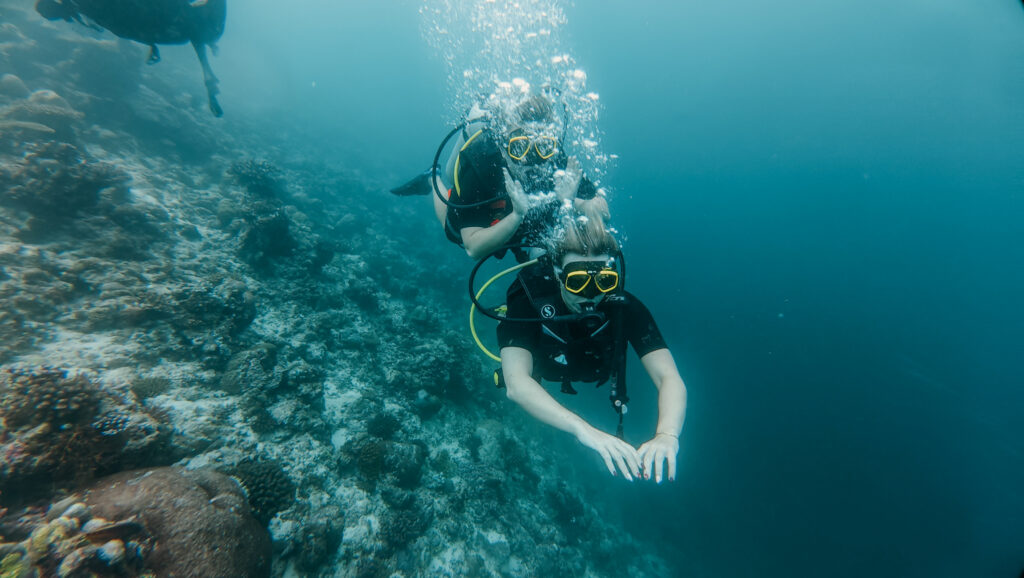
Here’s the thing about the Maldives: you could fill every day with excursions — dolphin trips, sandbank lunches, snorkel safaris — and still barely scratch the surface.
But when you’re travelling on a budget, it’s about knowing which experiences are worth the splurge… and which ones you can skip.
I booked (and tested) a mix of excursions across Thulusdhoo, Dhiffushi, and Dhigurah, and these were the ones that genuinely felt magical — the kind that stay with you long after you’re home.
🐋 Swim with Whale Sharks in Dhigurah
If you do just one excursion in the Maldives, make it this.
Dhigurah sits in the South Ari Atoll, one of the few places in the world where whale sharks can be seen all year round.
You’ll board a small boat with a few other travellers, cruise across impossibly blue water, and then — out of nowhere — a shadow the size of a car glides beneath you.
It’s humbling, surreal, and worth every penny.
Expect to pay around $75 USD per person for a half-day trip, including gear and guide.
Most tours also combine whale sharks with manta rays or coral garden snorkelling.
🌅 Sandbank & Snorkel Trips
From any of the islands — Thulusdhoo, Dhiffushi or Dhigurah — you can join half-day sandbank trips, usually including snorkelling, fruit platters and drone-perfect views.
Prices range from $40–$60 USD, and it’s the best way to feel like you’re on your own private island without paying resort prices.
Pack your camera, reef-safe sunscreen and a sarong.
These little sandbars are where your most iconic “Maldives moment” will probably happen.
🐬 Dolphin & Sunset Cruises
Dhiffushi was my favourite place for this.
As the sun dipped low, pods of dolphins swam alongside our boat, flipping and racing through the golden water.
It’s calm, romantic, and family-friendly — and usually around $35–$45 USD per person.
Bring a lightweight cardigan, your camera, and a good playlist.
🧜♀️ Thulusdhoo Surf & Snorkel Adventures
Thulusdhoo has a slightly more adventurous energy, perfect if you like your trips active.
You can hire boards or join boat trips out to surf breaks like Cokes and Chickens.
For non-surfers, the snorkel safaris are incredible — colourful reefs, baby sharks, and electric-blue parrotfish everywhere.
Snorkel trips start around $30–$50 USD, depending on duration.
🎣 Night Fishing & BBQs
This is one of the best local experiences you can have — usually around $25–$35 USD.
You’ll go out on a traditional dhoni at sunset, drop your line overboard, and fish under the stars.
Whatever you catch, the crew will grill right on the beach when you get back.
It’s simple, social, and unforgettable.
✨ Pro Tip: Choose Quality Over Quantity
When you’re budgeting, pick 2–3 excursions and do them well.
Most guesthouses can arrange tours at fair prices, and if you travel in a group, they’ll often give you a discount.
And remember — the real magic of the Maldives doesn’t always come from an itinerary.
Some of my favourite moments were free: walking Dhigurah’s endless beach at sunrise, or watching a storm roll in from the jetty.
The Secret Side of the Maldives
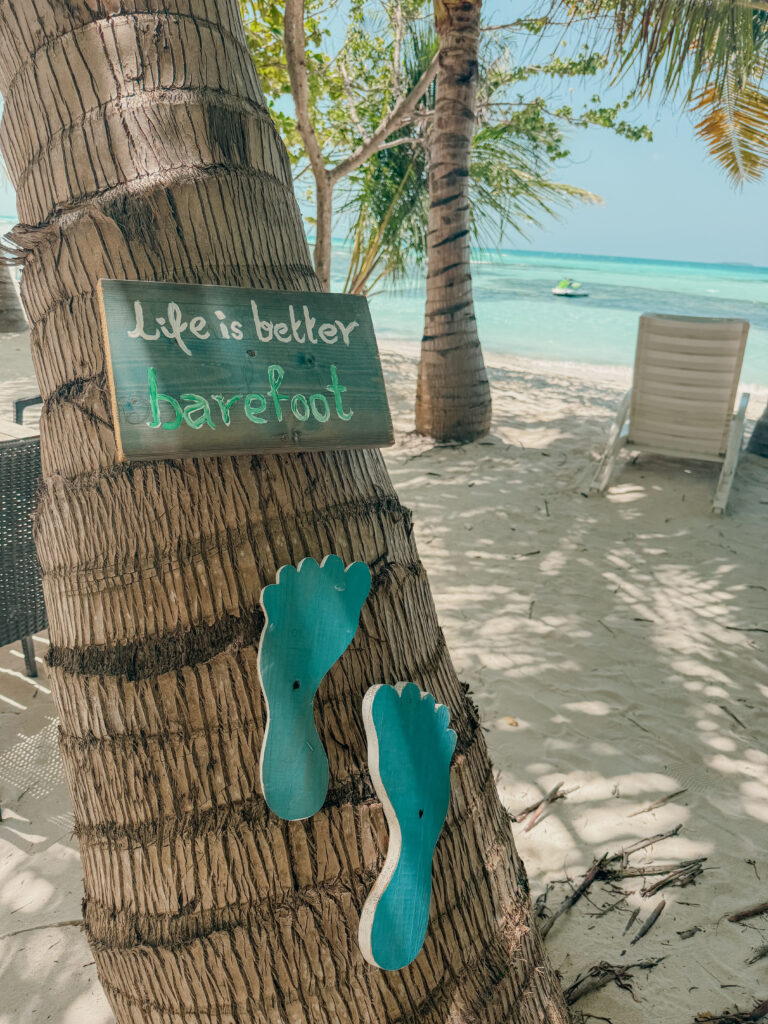
There’s a side of the Maldives that the glossy brochures don’t show you — one that doesn’t come with champagne flutes or overwater villas.
It’s the sound of kids laughing in the streets after school.
The smell of grilled tuna drifting through the air as the call to prayer echoes over pastel-painted rooftops.
It’s the part of the islands where real life still happens — and that’s exactly what makes it so beautiful.
When you stay on a local island, you’re not just visiting paradise — you’re stepping into someone’s home.
You walk through narrow sand lanes, wave to shop owners, and see fishermen hauling in the day’s catch as you sip your morning coffee.
There’s rhythm, warmth, and a sense of connection you’ll never find behind resort gates.
🏠 Culture Meets Calm
Each island has its own personality, but they all share one thing — a gentle, welcoming pace of life.
Locals might ask where you’re from, offer you fruit, or point you to their favourite snorkelling spot.
And you start to realise: you’re not an outsider here, you’re part of the ebb and flow of island living.
A few things to know (and respect):
- Dress modestly in village areas — cover shoulders and knees when walking around.
- Bikini beaches are clearly marked, so you can sunbathe freely there.
- Friday is the local day of prayer, so some cafés or shops might close temporarily — embrace it as a slower day.
🌺 A Slower Kind of Luxury
There’s something grounding about realising that luxury doesn’t always look like marble bathrooms.
Sometimes it’s a quiet cup of tea under a palm tree.
Sometimes it’s learning a few words in Dhivehi, the local language, and seeing someone’s face light up when you try.
And sometimes it’s realising that you don’t need to escape anything to feel free — you just needed to see life somewhere that runs on island time.
This is the Maldives I fell in love with.
Not the filtered, postcard-perfect version — but the one with sand on your feet, salt in your hair, and a heart that feels full just from being there.
Resort Day Passes — The Smart Hack
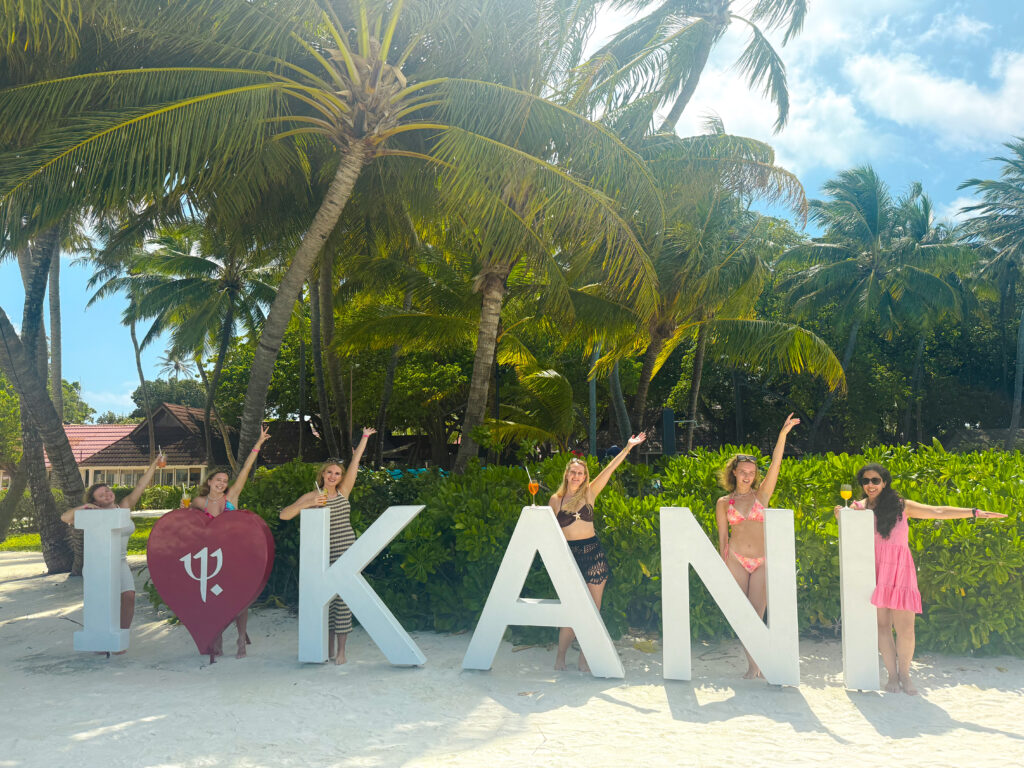
Here’s a little secret that most first-time visitors to the Maldives don’t know:
you don’t need to stay in a resort to experience one.
From many local islands, you can buy a resort day pass — a golden ticket that lets you spend the day living that overwater dream without paying the £1,000-a-night price tag.
🏖️ What a Day Pass Includes
Day passes usually cover:
- Return speedboat transfers from your local island
- Full access to pools, beaches, and sun loungers
- Lunch or food credit at the resort restaurant
- Sometimes drinks or a cocktail bar tab
- Towels, changing rooms, and free time to explore
Think of it as your chance to dip into the five-star world, take those iconic photos, and sip a mojito at the infinity pool before heading back to your guesthouse for a cosy, budget-friendly sleep.
🌅 Why It’s Worth It
You can visit resorts like LUX, Centara, or Sun Island* from nearby local islands (Dhigurah has some of the best options).
Expect to pay between $100–$150 USD for the full experience — which sounds like a lot until you realise it’s less than the taxes on one resort night.
You can sunbathe, enjoy a gourmet lunch, and sneak in that dreamy “floating breakfast” photo without committing to an entire stay.
It’s also a smart way to experience the contrast — resort calm vs. local island buzz.
You’ll appreciate both sides more when you’ve felt them.
⚡ Pro Tip
It works one way only: you can visit resorts from local islands, but resort guests can’t visit local islands without special permission.
That means you get the best of both worlds — the culture, the community, and the luxury.
Ask your guesthouse to help you book a pass (they often have direct resort contacts) or check Facebook groups for updated pricing.
🌴 My Experience
I took a day pass from Dhigurah to a nearby resort, and it was one of the highlights of my trip.
Lounging by the pool, cocktail in hand, it felt surreal knowing that just that morning I’d had breakfast barefoot on a quiet local beach.
That’s the beauty of the Maldives done your way — you don’t have to choose between authenticity and indulgence.
You can have both.
Budget Breakdown — How Much It Really Costs
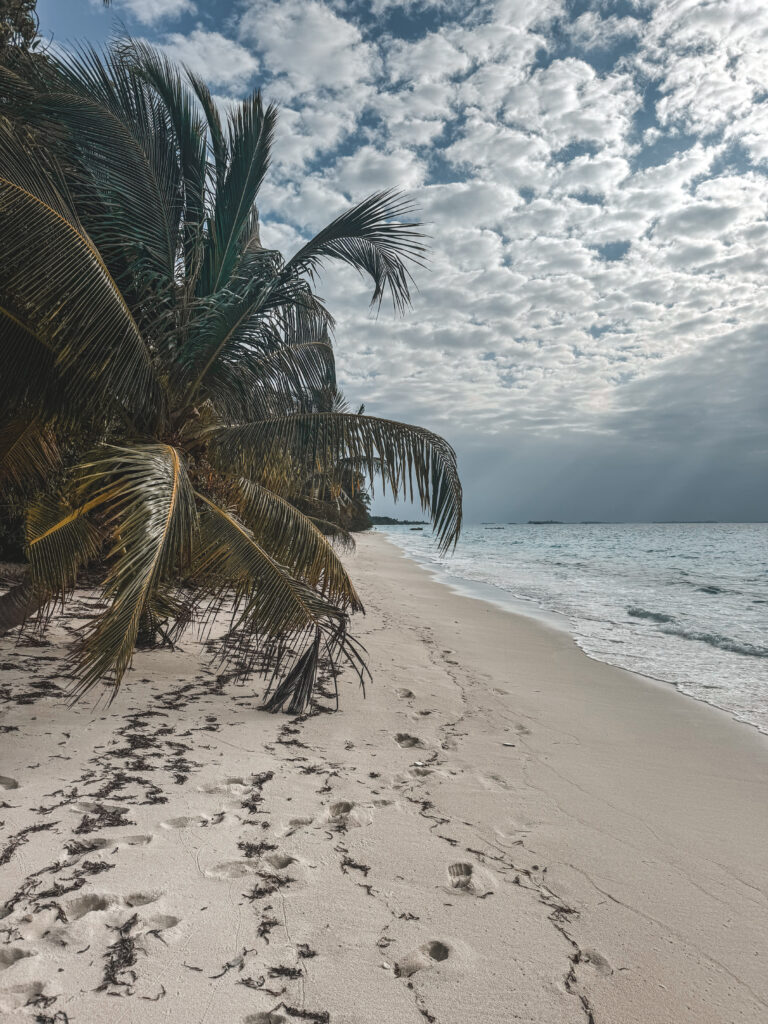
Let’s talk money — because that’s what usually stops people from booking the Maldives in the first place.
The truth? You can do the Maldives beautifully, comfortably, and even a little luxuriously without blowing your savings.
Here’s exactly what to expect when you plan it right.
✈️ Flights
Return flights from the UK to Malé average £600–£800, depending on season and route.
Book 2–3 months ahead or use flight alerts — I’ve seen them dip as low as £480 return in shoulder season (May or October).
If you’re flexible, flying midweek can save you up to £150.
🏠 Accommodation
- Local guesthouses: £45–£120 per night
- Boutique hotels: £80–£150 per night
- Resort day pass (optional treat): £100–£150 for the day
For a 9-night stay (like mine), you’re looking at roughly £500–£900 total, depending on comfort level.
Most include breakfast — which immediately cuts your food budget.
🍛 Meals
- Local cafés: £3–£8 per meal
- Western restaurants: £10–£15
- Fresh juices & smoothies: £2–£5
If you eat local once a day and treat yourself once a day, your total food spend will be around £150–£200 for a week.
🚤 Transfers
- Speedboats: £25–£80 each way depending on distance
- Public ferries: £2–£5 per route
- Island-hopping transfers (3–4 legs): ~£120 total
Pro tip: Always book transfers through your guesthouse WhatsApp contact — they’ll get you the local rate and confirm timing.
🐋 Excursions
Pick your top 2–3 must-dos rather than trying to do them all.
Here’s a realistic spend:
| Excursion | Approx. Price |
|---|---|
| Whale shark & manta snorkelling | $75 (£60) |
| Sandbank & snorkel trip | $50 (£40) |
| Dolphin/sunset cruise | $40 (£32) |
| Night fishing & BBQ | $35 (£28) |
You can do all four for under £160 total — less than the cost of one night in a resort room.
🌺 Total Trip Estimate (9 Nights / 10 Days)
| Category | Estimated Cost |
|---|---|
| Flights | £600–£800 |
| Accommodation | £500–£900 |
| Food & Drinks | £200 |
| Transfers | £120 |
| Excursions | £150 |
| Total: | £1,570–£2,170 |
That’s for a 10-day Maldives holiday with local charm, luxury touches, and bucket-list moments — not a honeymoon loan.
✨ Reality Check
The Maldives can be done your way.
Some days you’ll eat curry with your hands at a beach café for £4, other days you’ll sip a cocktail by an infinity pool for £10.
It’s not about choosing between budget and boujee — it’s about blending both intentionally.
And once you see how doable it actually is, that dream-trip mindset shift happens:
“This isn’t a once-in-a-lifetime destination.
It’s somewhere I can keep coming back to — smarter each time.”
Next Steps — Plan Your Own Dream Trip
So there it is — the real, unfiltered, doable Maldives.
The side that doesn’t need an overwater villa or a honeymoon fund.
The one where you eat fresh fish straight from the grill, snorkel with whale sharks, and fall asleep to the sound of waves outside your guesthouse window.
If you take one thing from this guide, let it be this:
the Maldives isn’t a fantasy destination. It’s accessible, welcoming, and absolutely worth it.
You just need the blueprint — and now you have it.
✈️ How to Plan It
- Pick your islands:
- Thulusdhoo for surf and social vibes.
- Dhiffushi for calm lagoon life.
- Dhigurah for whale sharks and long, wild beaches.
- Book local guesthouses early (I recommend using Booking.com or Agoda for flexibility).
- Sort your transfers via WhatsApp — your host will book your speedboat or ferry seat for the best price.
- Choose two or three excursions, not ten. Whale sharks, sandbanks, dolphins — done right, that’s all you need.
- Bring reef-safe sunscreen, a sarong, and an open mind.
💫 If You’d Rather Go Guided
If planning isn’t your thing, or you’d rather travel with people who get it —
you can book a guided group trip like the one I joined through Say Yes! Adventures.
You’ll have your transfers, accommodation, and excursions sorted — and you’ll still experience every local-island moment from this guide.
It’s the perfect way to travel solo without ever feeling alone.
🌴 Before You Go
Once you’ve seen how attainable paradise really is — it changes the way you travel forever.
✨ You don’t need a five-star price tag to live a five-star life — just curiosity, courage, and a plane ticket.
Leave a Reply
[sol and sol-stis]
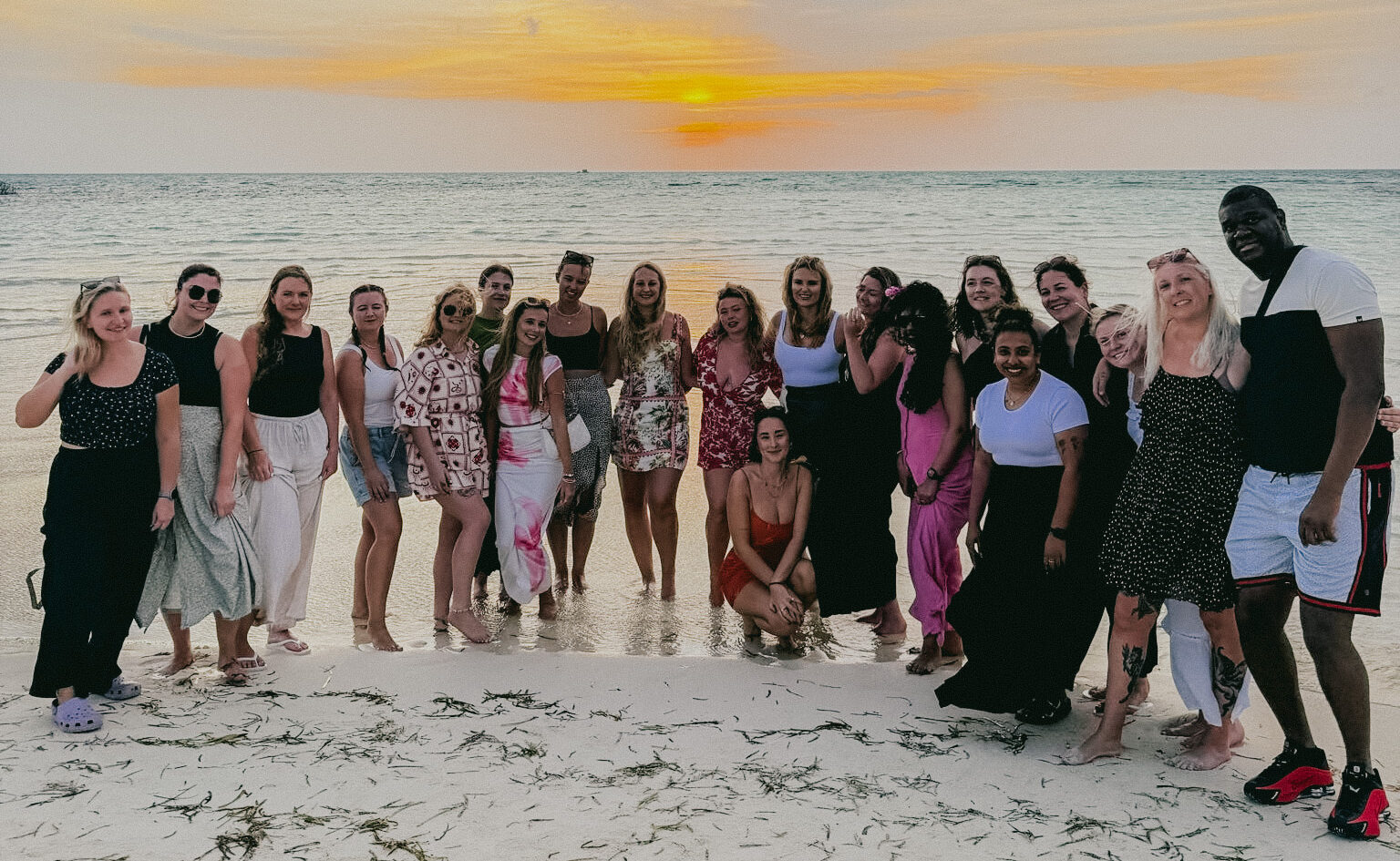
hosted group trips for the women who’ve decided they’ve wasted enough time waiting, for the right person, the right moment, or someone else to come with them.
sol & solstice
the solstice society
[sol-stis suh-sahy-i-tee]
a diverse community of women who share solo travel tips, stories, and support. no trip booking required.
Recent Blog Entries
You said you'd stop waiting. So?


Comments